ONT Bridge Mode: When to Use It, When Not To, and How to Undo It
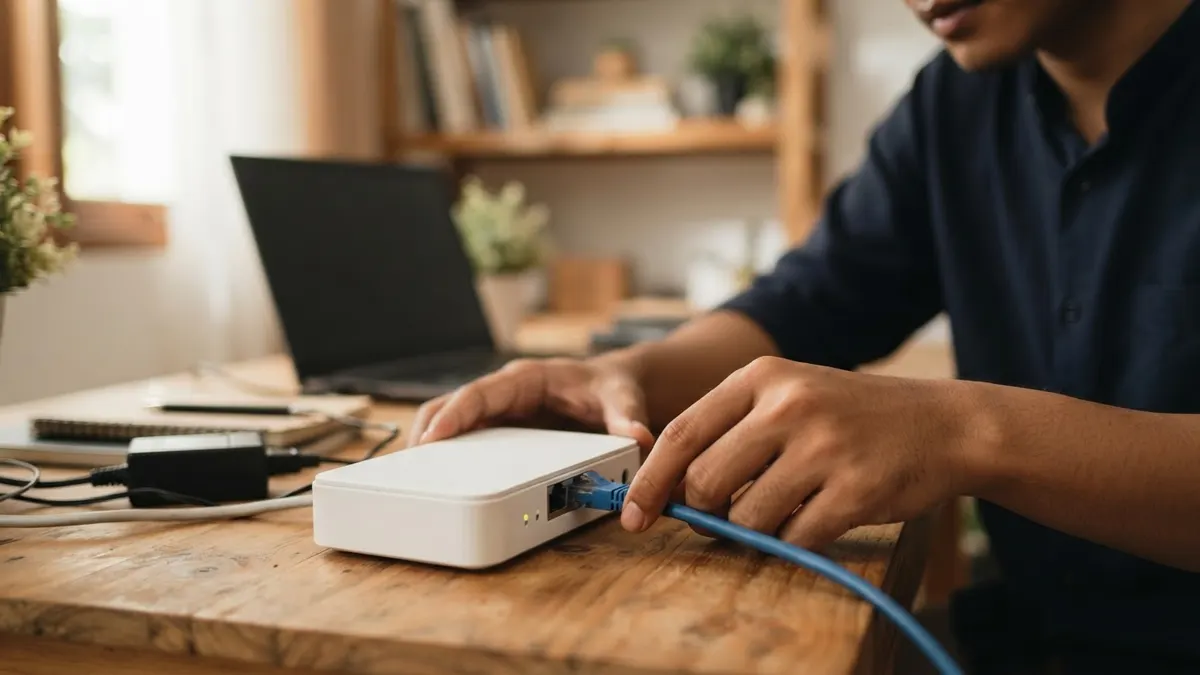
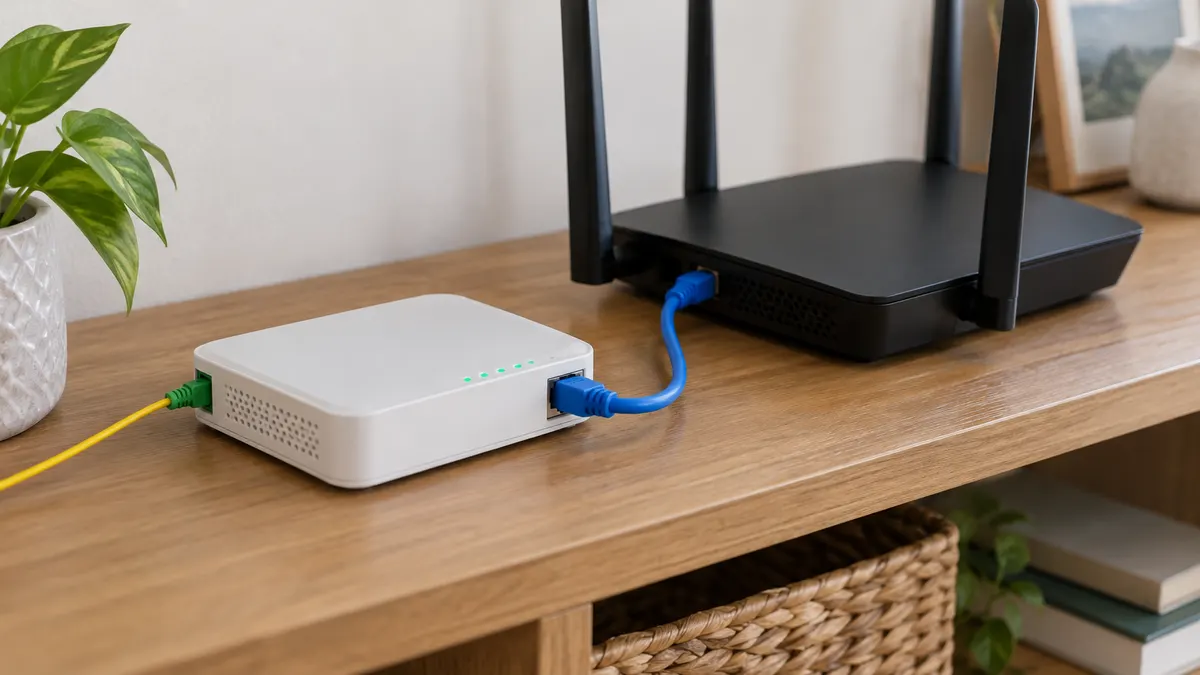
Putting your own router behind the ONT often ends in two layers of NAT. Bridge mode clears that up, but it isn't always the right choice.
Wi-Fi, internet security, connection troubleshooting, and networking for small businesses. All written in-house.
Putting your own router behind the ONT often ends in two layers of NAT. Bridge mode clears that up, but it isn't always the right choice.
A technician asks "what's your IP?" and you find two different numbers: one in the Wi-Fi settings, another on an IP checker site. Both are right. One is your address inside the house, the other your address on the internet.
Your home IP changes without notice, and remote access that worked yesterday breaks today. DDNS solves that, with one requirement that often isn't met.
The feature that lets a console go online without setup also lets a device you don't trust open a door from the inside.
Full bars in the back room don't guarantee fast internet there. What decides it is the link between one mesh node and the next.
A printer that shows up in your phone's Wi-Fi list, or a TV that takes your screen without the home network, is almost always working over Wi-Fi Direct.
A stream that fails mid-event is almost never about download speed. Upload decides it, and upload is often a tenth of the number printed on the plan.
When the internet works but one app won't connect, it's almost always a single door closed rather than the whole connection failing.
Two routers, one twice the price of the other, often differ only in these three terms. Some genuinely matter, but only if your devices support them too.
New routers often show only one Wi-Fi name despite having two bands. That's band steering: the router deciding which device goes on which band, and it isn't always right.
Before calling your internet provider, five minutes with ping and traceroute often already shows where the problem is.
One Wi-Fi name at home can come from three different transmitters. Telling the name apart from the transmitter's address explains many problems that seem mysterious.
Send your question to the editorial team. The ones that keep coming up usually become the next guide.